
"Apoquel Nearly Killed My Dog": How This Dog Mom Finally Discovered the Safe, Natural Alternative That Stopped Itching in Just 7 Days
Linda K. is a real person and was not compensated for sharing her story. Medical details have been verified by veterinary records.
Published on Nov 10, 2025

It happened on a Tuesday morning in October.
Linda K. woke up to find her 9-year-old Labrador, Max, collapsed on the kitchen floor—barely breathing, unable to stand.
His gums were pale. His body was limp. His eyes were unfocused, like he wasn't really there.
"I thought he was dying," Linda said, her voice shaking at the memory.
She rushed Max to the emergency vet. Twelve hours later, after bloodwork, X-rays, and IV fluids, the vet sat her down with a grave expression.
"Max's immune system has been severely compromised," he said. "A skin infection spread into his bloodstream. His body couldn't fight it off. We almost lost him."
Linda felt the room spin. "But... how? Why couldn't his body fight an infection?"
The vet paused, then asked: "How long has Max been on Apoquel?"
"Almost a year," Linda said. "Why?"
"That's the problem."
When Apoquel Seemed Like a Miracle

Eleven months earlier, Apoquel had seemed like a miracle.
Max had been scratching for years. Linda tried special food, oatmeal baths, antihistamines—nothing worked for more than a few days.
Her vet prescribed Apoquel. "It's FDA-approved. Give him 16mg once daily—you should see results within 24 hours."
By the next morning, the scratching had stopped.
"I couldn't believe it," Linda recalls. "For the first time in several months, he wasn't scratching. I thought we'd finally found the answer."
For eight months, Apoquel worked perfectly. Max was like a puppy again—running in the yard, playing fetch, sleeping peacefully through the night.
But around month eight, the itching returned.
Linda called her vet.
"It's normal for some dogs to build tolerance," he explained. "Let's increase the dose to 16mg twice daily."
For a while, it worked again. But two months later, the itching came back—even worse than before.
"We need to go higher," the vet said. "Let's try 24mg twice daily. That's the maximum dose for his weight."
Linda hesitated. "Is that safe long-term?"
"Apoquel is very safe," the vet reassured her. "Millions of dogs take it without issues."
Linda gave Max the higher dose.
The itching improved. But Max started acting... different.
The Warning Signs She Ignored

At first, Linda didn't think much of it.
Max seemed more tired than usual. He'd sleep most of the day, barely interested in his walks.
"He's nine years old," Linda thought. "It's normal for older dogs to slow down."
Then she noticed his breath smelled worse than usual—a sour, slightly metallic smell.
"Probably just needs his teeth cleaned," she assumed.
A small hot spot appeared on Max's side. Linda treated it with antiseptic spray. It seemed to heal... then came back a week later in the same spot.
Then another hot spot appeared on his leg.
"Strange," Linda thought. "But at least he's not scratching everywhere anymore."
Max's appetite decreased slightly. He'd eat his food eventually—but without the usual enthusiasm. No more excited tail wagging at dinner time.
Linda mentioned it to her vet during a routine Apoquel refill.
"Older dogs can have decreased appetite," the vet said. "As long as he's still eating, it's probably nothing to worry about."
Linda went home. She gave Max his Apoquel that night, like always.
Over the next few weeks, the hot spots kept coming and going. One would heal, another would appear. Linda treated them with topical creams, but they never fully went away.
Max's energy continued to drop. Some days, he wouldn't even get up to greet Linda when she came home—something he'd done every single day for seven years.
"Maybe I should take him to the vet again," Linda thought.
But Max was still eating. Still drinking water. The itching was under control. And Linda had just spent $400 on vet visits that month.
"I'll give it another week," she decided. "If he doesn't improve, I'll call."
That was a decision she would regret.
Then Everything Changed

Five days later, Max started limping.
Linda checked his paw—one of the hot spots had gotten worse. The skin around it was red, swollen, and warm to the touch.
She called the vet immediately.
"Bring him in," the vet said.
At the clinic, the vet examined the infected hot spot. "It's a bacterial infection. Pretty common with skin issues. We'll put him on antibiotics for ten days."
The vet prescribed cephalexin, a strong antibiotic. "Give him one pill twice daily with food. The infection should clear up within a week."
Linda started the antibiotics that evening.
Within three days, the hot spot looked better. The swelling went down. Max seemed more comfortable.
By day seven, the hot spot had almost completely healed.
Linda finished the ten-day antibiotic course and breathed a sigh of relief.
She continued giving Max his daily Apoquel, just like the vet recommended.
Everything seemed fine.
For exactly four days.
"I Thought I Was Going to Lose Him"

On the fourth day after finishing antibiotics, Linda woke up at 6:30 AM.
Max wasn't in his usual spot by the bed.
She called his name. No response.
Linda walked into the kitchen.
Max was lying on his side on the floor, his body limp, his breathing rapid and shallow.
"Max!" Linda dropped to her knees beside him. "Max, can you hear me?"
Max's eyes opened slightly, but he didn't lift his head. His gums looked pale—almost white.
Linda's hands shook as she called the emergency vet.
"Bring him in immediately," the receptionist said, hearing the panic in Linda's voice.
Linda somehow got Max into the car—all 70 pounds of him, barely able to stand.
At the emergency clinic, a vet tech rushed Max to the back on a stretcher.
The vet examined him quickly. "His temperature is 105°F/40°C. His heart rate is elevated. His gums are pale, indicating poor circulation."
Linda's voice cracked. "What's wrong with him?"
"We need to run bloodwork and start IV fluids immediately. I'll be back as soon as I have answers."
Linda sat alone in the waiting room, terrified.
Twenty-five minutes later, the vet returned. His expression was grave.
"Linda, Max is in septic shock. A bacterial infection has spread into his bloodstream. This is life-threatening. We need to start aggressive IV antibiotics right away and keep him hospitalized for at least 48 hours."
Linda felt like she couldn't breathe. "But... we just finished antibiotics. The infection was gone."
The vet shook his head. "It wasn't gone. It was just suppressed. Max's immune system couldn't fully clear it. When the antibiotics stopped, the infection came back—and spread rapidly."
"Why couldn't his immune system fight it?" Linda asked, tears streaming down her face.
The vet pulled up Max's bloodwork on the computer.
"That's what I need to explain."
The Blood Test That Changed Everything

Linda stared at the screen, not understanding. "But... he's been healthy. How did this happen?"The vet showed Linda the lab results.
"Max's white blood cell count is critically low," he said, pointing to the numbers. "His neutrophils—the cells that fight bacterial infections—are barely present. His immune system is severely compromised."
Linda stared at the screen, not understanding. "But... he's been healthy. How did this happen?"
The vet's expression was serious. "Linda, how long has Max been on Apoquel? And what dose?"
"Almost a year. He's on 24mg twice daily now. His regular vet increased it because the itching came back."
The vet closed his eyes briefly, then looked directly at Linda.
"Apoquel works by suppressing immune responses—specifically, the JAK enzymes that trigger inflammation and itching. But long-term use, especially at high doses, can suppress the immune system too much. Your dog's body loses its ability to fight off infections."
Linda felt sick. "Are you saying Apoquel did this?"
"I'm saying Apoquel likely contributed," the vet said carefully. "The prolonged immune suppression left Max vulnerable. What should have been a simple skin infection became life-threatening because his body had no defenses left."
He showed her another line on the bloodwork. "His liver enzymes are also elevated—another potential side effect of long-term Apoquel use."
Linda's hands trembled as she stared at the report.
"Is he going to survive?"
The vet paused. "We're doing everything we can. But I need you to understand—if you'd waited even one more day to bring him in, we probably would have lost him."
Three Days in the ICU

Max stayed in the ICU for three days.
IV antibiotics. Fluids. Immune system support. Round-the-clock monitoring.
Linda visited twice daily, watching her dog lie motionless in a cage, tubes running from his legs.
"This is my fault," she kept thinking. "I trusted Apoquel was safe."
On the third day, Max finally stood up on his own. He drank water. His gums returned to a healthy pink.
The vet ran bloodwork again. His white blood cell count was slowly recovering.
"He's going to make it," the vet said. "But Linda—you need to get him off Apoquel. Permanently."
Linda nodded, tears of relief streaming down her face.
But a new fear set in: If I stop Apoquel, the itching will come back. And I can't go through this again.
"Is there another option?" she asked desperately. "Something that actually works without destroying his immune system?"
The vet paused. "There might be. But I'd recommend seeing a veterinary dermatologist. They specialize in treating chronic skin issues without relying on immune suppression."
A Neighbor's Surprising Recommendation

Two weeks after Max came home from the hospital, Linda was walking him slowly around the neighborhood—his first real walk since the collapse.
Her neighbor, Karen, stopped her.
"Linda! I heard what happened to Max. How is he?"
Linda's eyes filled with tears. "He almost died. From Apoquel."
Karen's face fell. "Oh no. I'm so sorry."
"I don't know what to do," Linda said. "If I stop Apoquel, the itching comes back. But I can't risk another infection."
Karen hesitated, then said: "My dog had the same problem. Chronic itching for years. I had her on Apoquel too—until my friend convinced me to see a veterinary dermatologist."
Linda looked up. "Did it help?"
"It changed everything," Karen said. "The dermatologist explained that the real problem isn't allergies—it's a damaged skin barrier. And there's a way to fix it without immune suppression."
Linda felt a spark of hope. "What do you mean?"
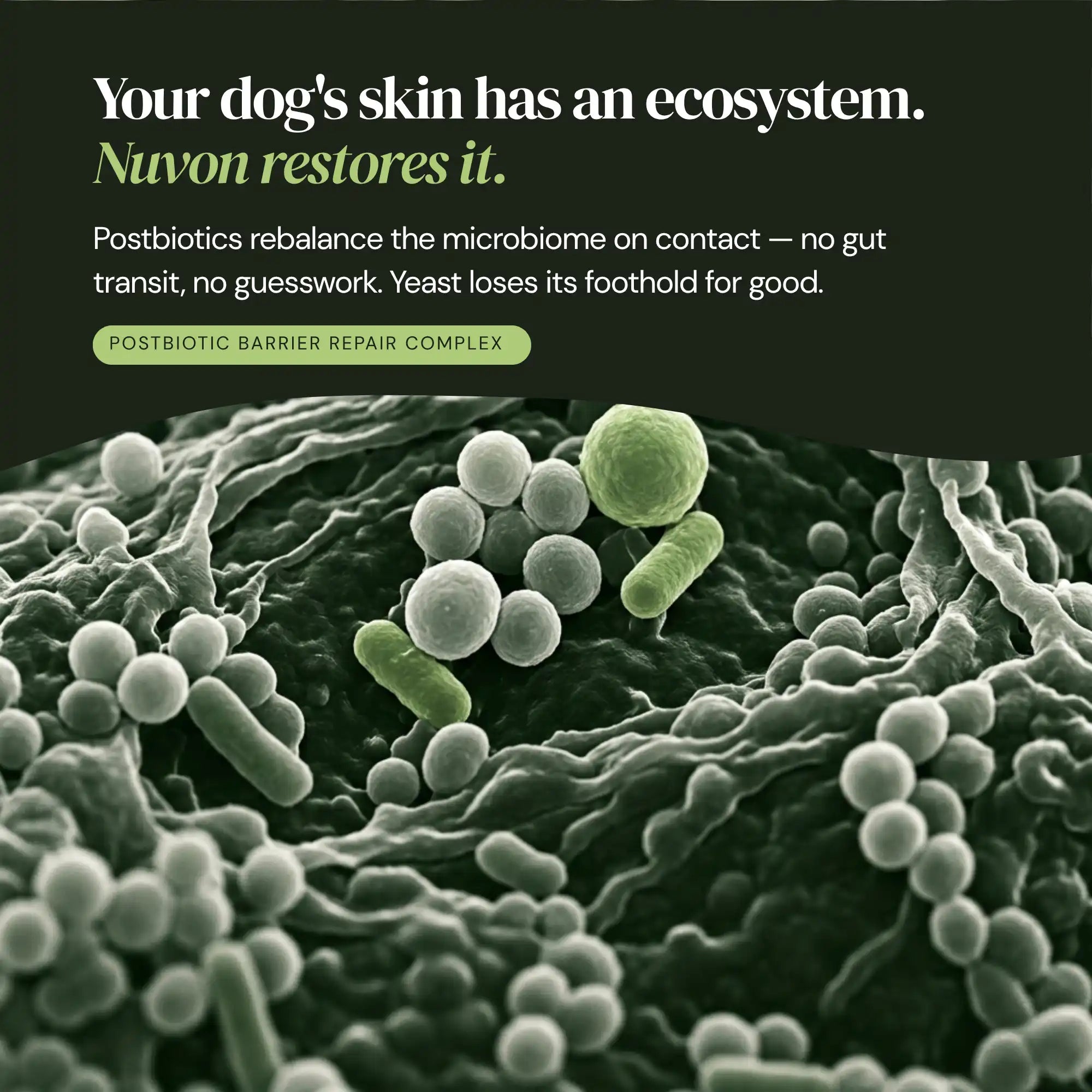
Karen continued: "He explained that when dogs scratch or lick excessively, they destroy the protective layer of beneficial bacteria on their skin—the skin microbiome. Once that barrier breaks down, allergens,harmful bacteria and yeast invade. The skin becomes inflamed. That's what causes the itching, the hot spots, the infections."
"But what about Apoquel?" Linda asked.
"That's the thing," Karen said.
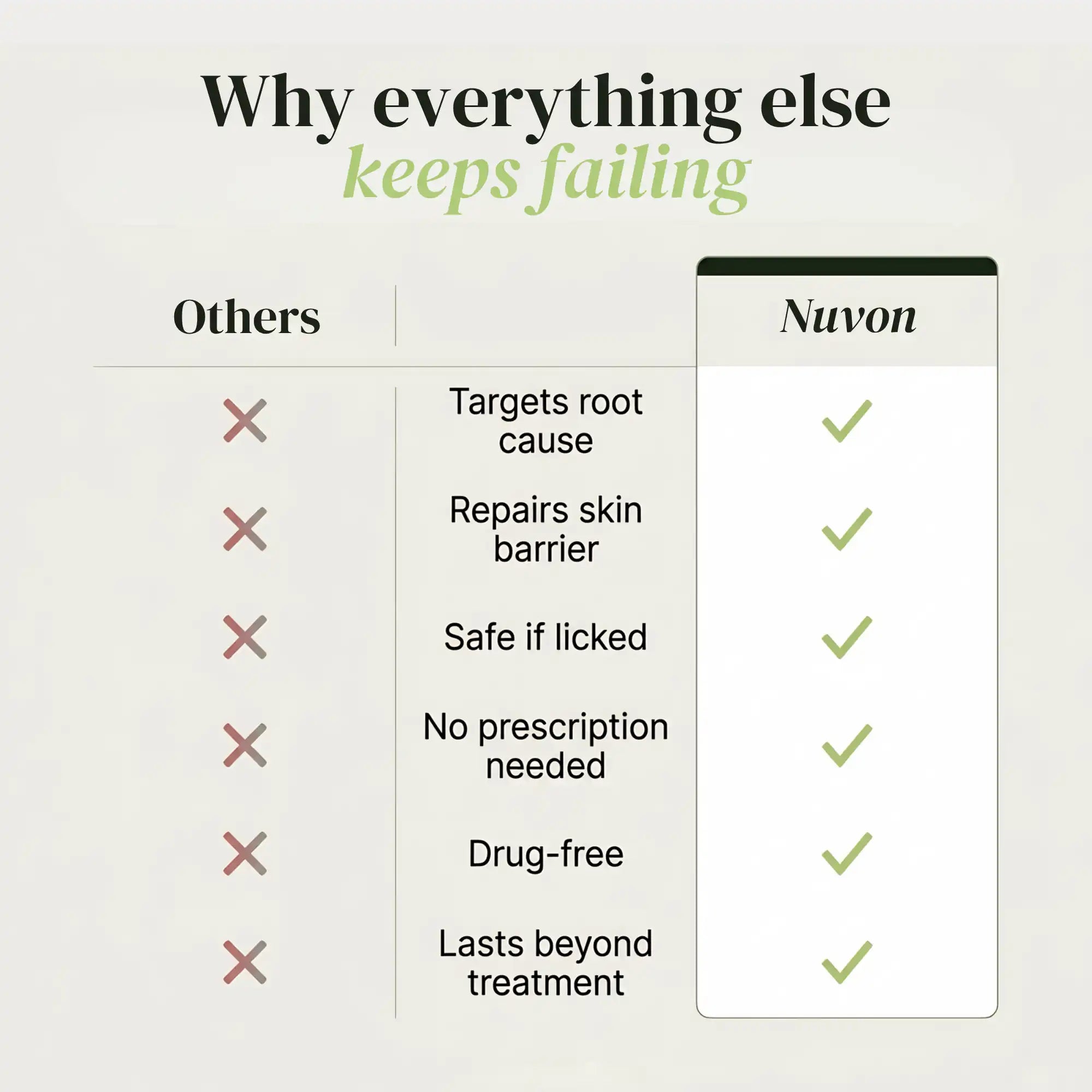
"Apoquel suppresses the itching by blocking the immune response. But it doesn't rebuild the barrier. That's why the itching always comes back. And why Max's immune system got so weak—his body had no defenses left."
Linda felt everything click into place. "So how do you fix the barrier?"
"The dermatologist recommended a spray with postbiotics," Karen said.
"They're different from probiotics—they feed the good bacteria already on the skin and help rebuild the protective barrier naturally. My dog's been off Apoquel for four months now. No itching. No infections. Nothing."
Linda's heart raced. "What's it called?"
"Nuvon. Let me send you the link."
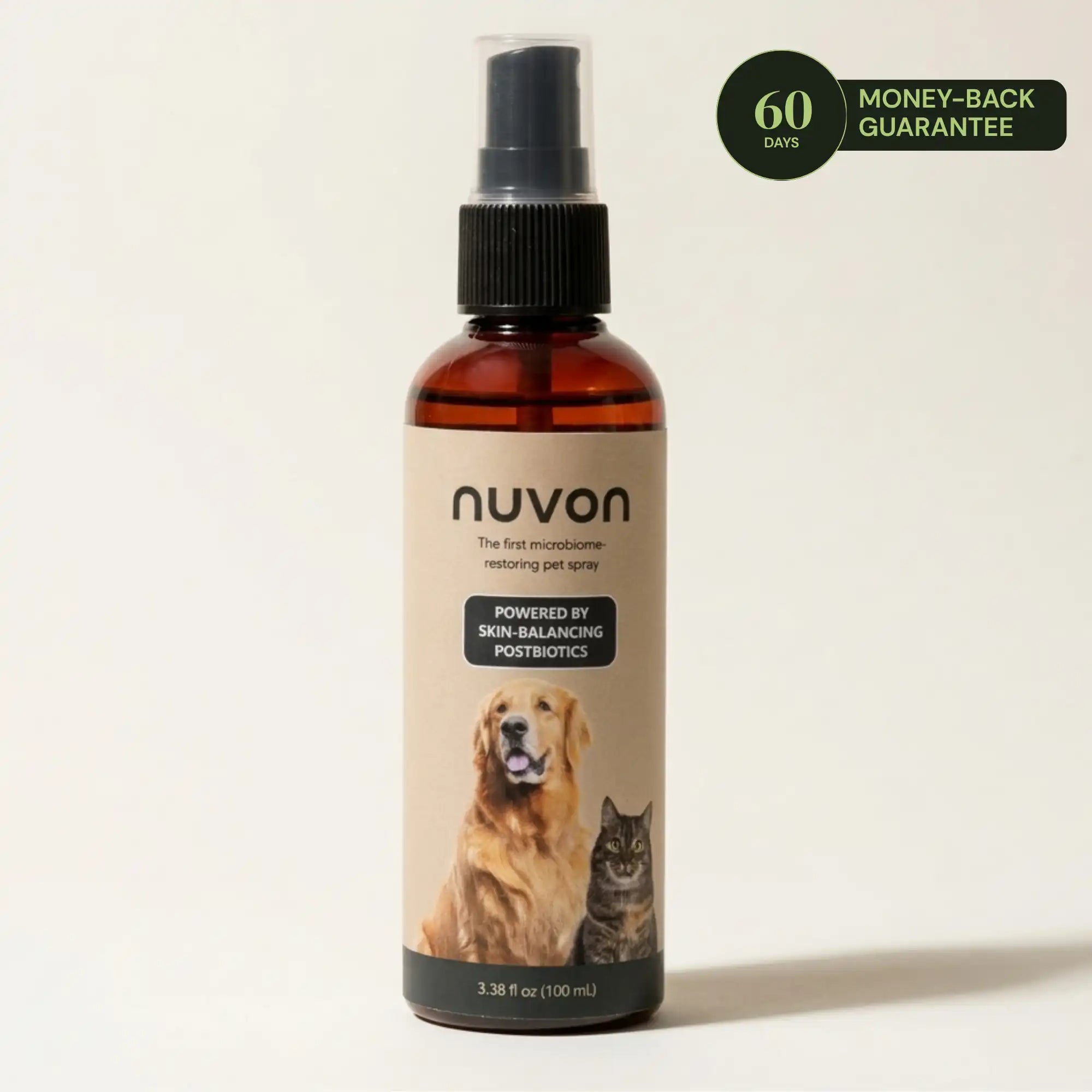
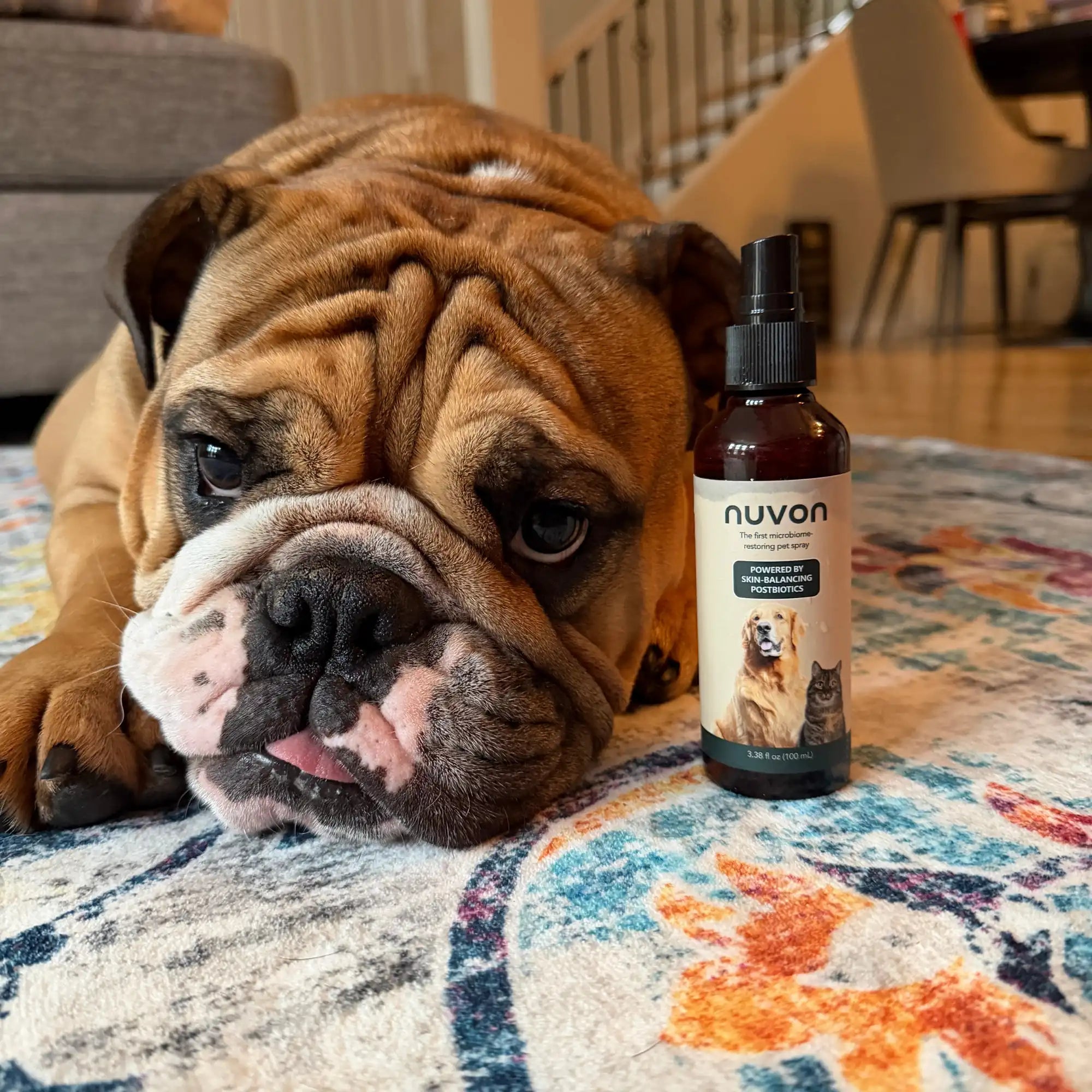
It's called Nuvon Postbiotic Spray And Unlike Apoquel, It Actually Rebuilds The Skin Barrier Instead of Destroying The Immune System
This powerful spray uses cutting-edge "Postbiotic Microbiome Technology™" to restore your dog's natural skin defenses and break the itch-scratch cycle for good.
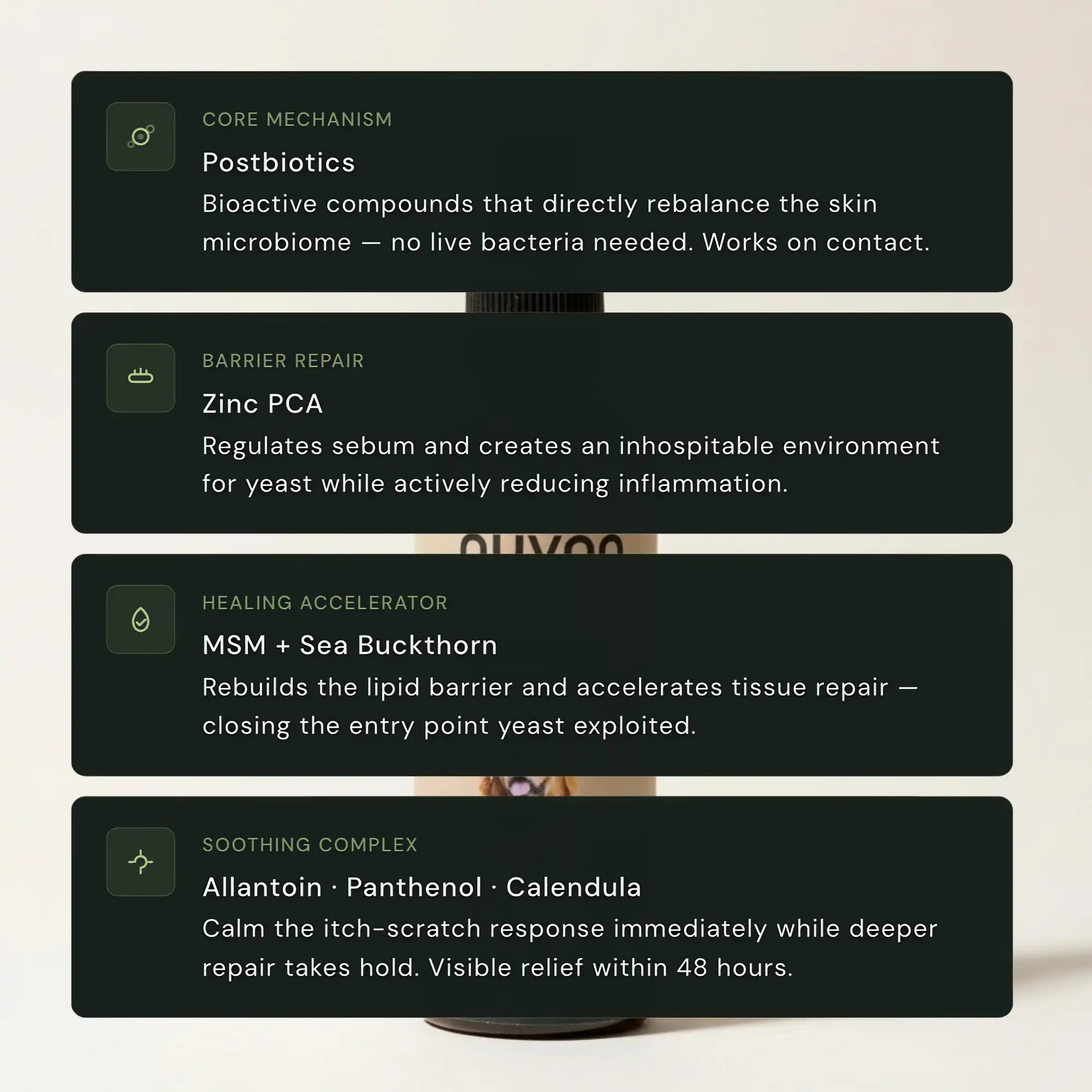
What Makes Nuvon Different: The Science Behind Postbiotics.
Here's how they work:
✅ They feed the existing good bacteria on your dog's skin, helping them multiply naturally.
✅ They starve harmful bacteria and yeast, preventing overgrowth.
✅ They rebuild the skin's protective barrier, so allergens and infections can't get in.
✅ They reduce inflammation naturally, without suppressing the immune system.
They create the perfect environment for your dog's natural defenses to heal themselves.
The First Two Weeks Off Apoquel

When Nuvon arrived three days later, Linda read the instructions carefully.
Spray twice daily on affected areas. Safe for long-term use. No side effects.
She started using it that evening on Max's paws and belly—the areas where his itching had always been worst.
Max didn't even notice. The spray was clear, odorless, and gentle.
For the first three days, Linda kept Max on a reduced dose of Apoquel—just 8mg once daily—terrified the itching would return.
But by day four, Max wasn't scratching at all.
Linda cautiously stopped the Apoquel completely.
Day five: No scratching.
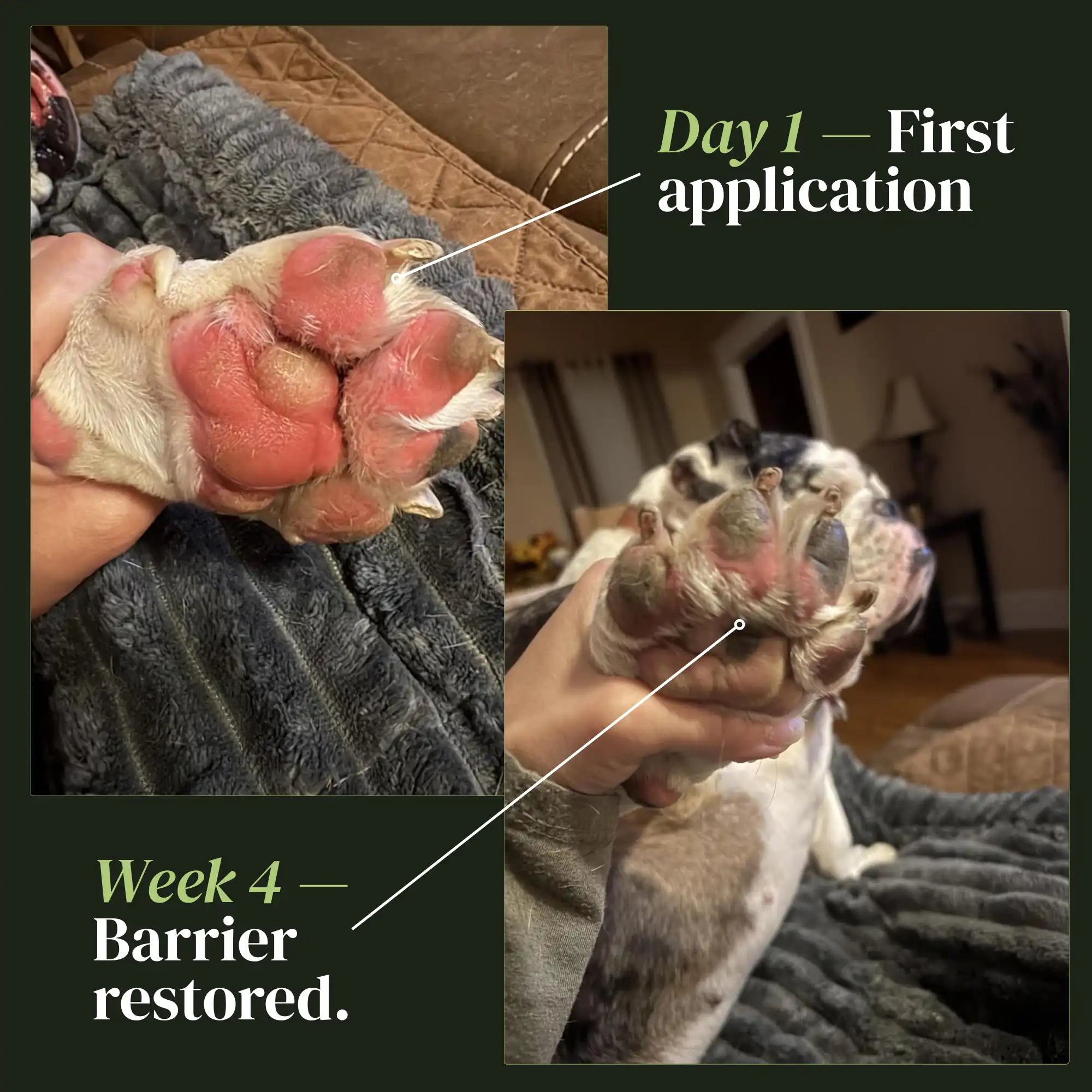
Day seven: Max's paws looked better—less red, less inflamed.
Day ten: The hot spots that had plagued him for months finally started healing.
Linda called her vet and requested bloodwork.
Two weeks after stopping Apoquel, Max's white blood cell count was back in the normal range.
"His immune system is recovering," the vet said, clearly surprised. "Whatever you're doing, keep doing it."
Linda breathed a sigh of relief.
For the first time in months, Max seemed like himself again—playful, energetic, healthy.
And he wasn't scratching.
Five Months Later: Max Is Thriving

It's been five months since Linda stopped giving Max Apoquel.
Max hasn't needed a single pill. No itching. No hot spots. No infections. No emergency vet visits.
His bloodwork is normal. His energy is back. His coat is shiny and full.
"I can't believe I almost lost him," Linda said. "All because I trusted that Apoquel was safe long-term."
Linda now shares her story in Facebook groups and online forums, warning other dog owners.
"If your dog is on Apoquel, please watch for these warning signs," she writes:
✅ Increased lethargy or decreased appetite
✅ Recurrent infections that don't fully heal
✅ Hot spots that keep coming back
✅ Any signs of weakness or collapse
"And please—ask your vet about alternatives. There are safer ways to treat chronic itching without suppressing your dog's immune system."
Max is now nine years old. He runs, plays fetch, and sleeps peacefully through the night.
Linda uses Nuvon twice daily and hasn't looked back.
"Nuvon didn't just stop the itching," Linda said. "It gave Max a second chance at life. And I'm grateful every single day that we found it before it was too late."
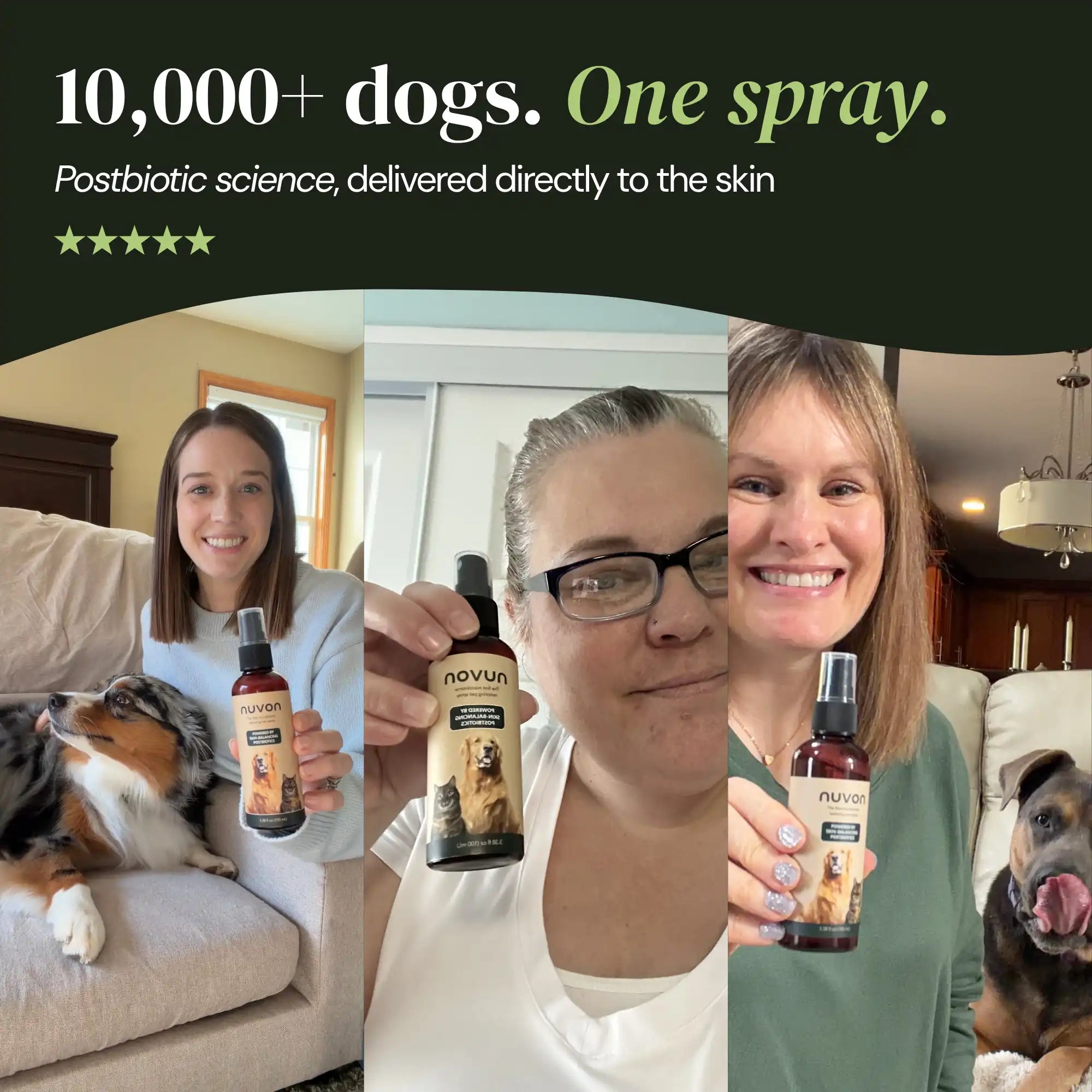
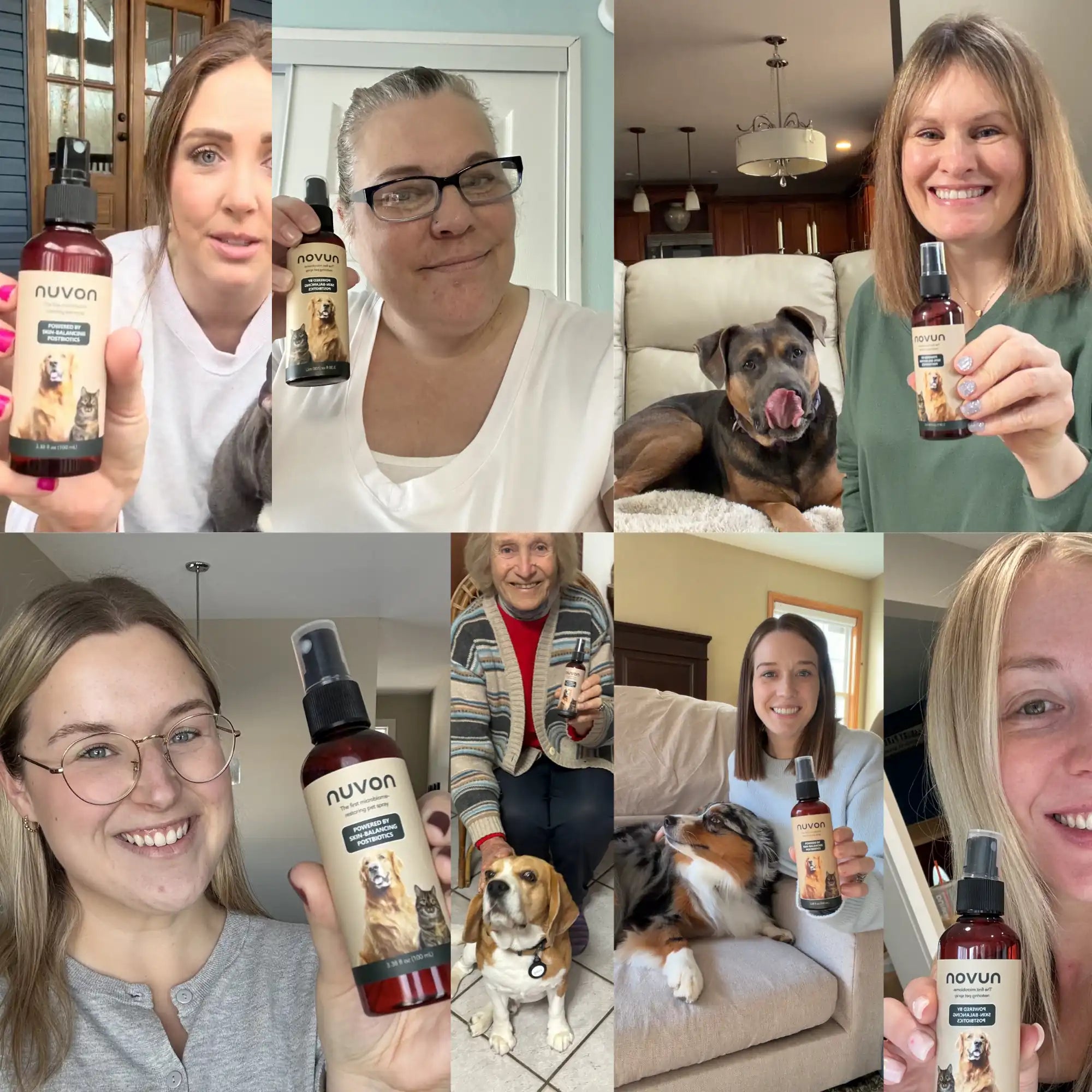
More Than 8,700 Dog Owners Have Already Made the Switch From Apoquel

Nuvon was only released recently, but it's already captured the attention of thousands of dog owners across the country.
Once people learned there was a safe, affordable, and effective solution for chronic itching that actually rebuilds the skin barrier instead of just masking symptoms, they were eager to try it.
As a result, Nuvon sold out completely—twice—in the past year.
Word has been spreading through online forums, Facebook groups, and recommendations from veterinary dermatologists who understand the importance of microbiome health.


If Your Dog Is on Apoquel, Read This
If your dog is currently on Apoquel, you need to know this:
Apoquel works by suppressing the immune system. While it can provide temporary relief from itching, long-term use—especially at high doses—can leave your dog vulnerable to serious infections, just like what happened to Max.
More importantly, Apoquel doesn't fix the underlying problem: the damaged skin barrier that's causing the itching in the first place.
That's why the itching always comes back. And why so many dogs build tolerance and need higher and higher doses.
There's a better way.
Nuvon Spray uses postbiotics to rebuild your dog's skin microbiome naturally—without suppressing the immune system.
It addresses the root cause, not just the symptoms.
If you're tired of watching your dog suffer—and worried about the long-term risks of Apoquel—Nuvon may be the solution you've been looking for.
⚠️ UPDATE
Since this advertorial was originally published, there's been tremendous "buzz" about Nuvon and the company has seen a huge surge in sales. While their inventory is now dwindling, they're still offering an "Internet Only Promotion" and bundle discount. (This offer is only available while supplies last.)
To find out if Nuvon is still in stock, click the button below.
Stock Running Low!!
Secure Your Bottles Before They're Gone
APPLY DISCOUNT & CHECK INVENTORYTHIS IS AN ADVERTISEMENT AND NOT AN ACTUAL NEWS ARTICLE, BLOG, OR CONSUMER PROTECTION UPDATE
MARKETING DISCLOSURE: This website is a market place. As such you should know that the owner has a monetary connection to the product and services advertised on the site. The owner receives payment whenever a qualified lead is referred but that is the extent of it.
ADVERTISING DISCLOSURE: This website and the products & services referred to on the site are advertising marketplaces. This website is an advertisement and not a news publication. Any photographs of persons used on this site are models. The owner of this site and of the products and services referred to on this site only provides a service where consumers can obtain and compare.